The key idea
Treating forehead lines means balancing wrinkle reduction with the muscle support that keeps your brows and eyes comfortable.
Which muscles are being treated?
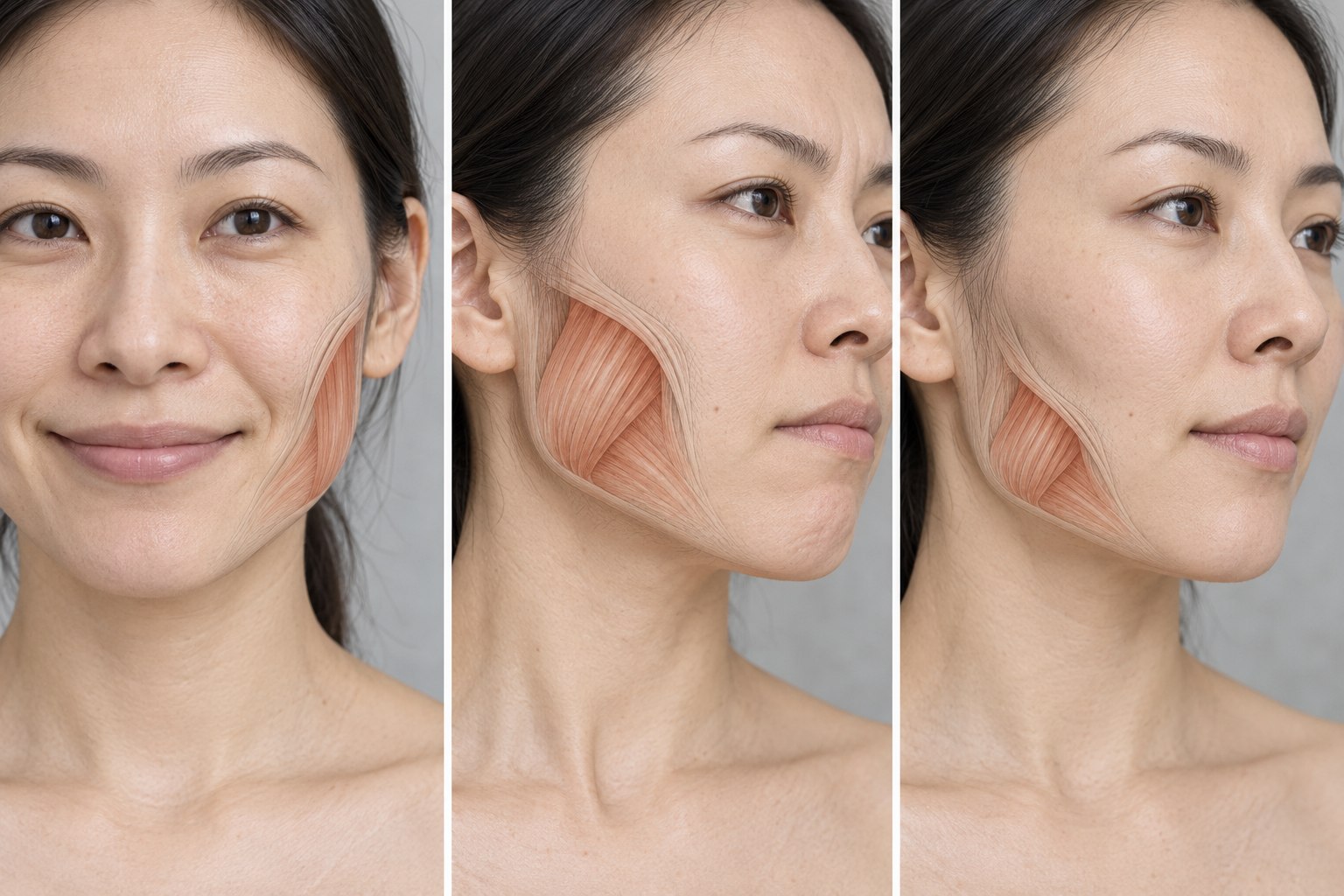
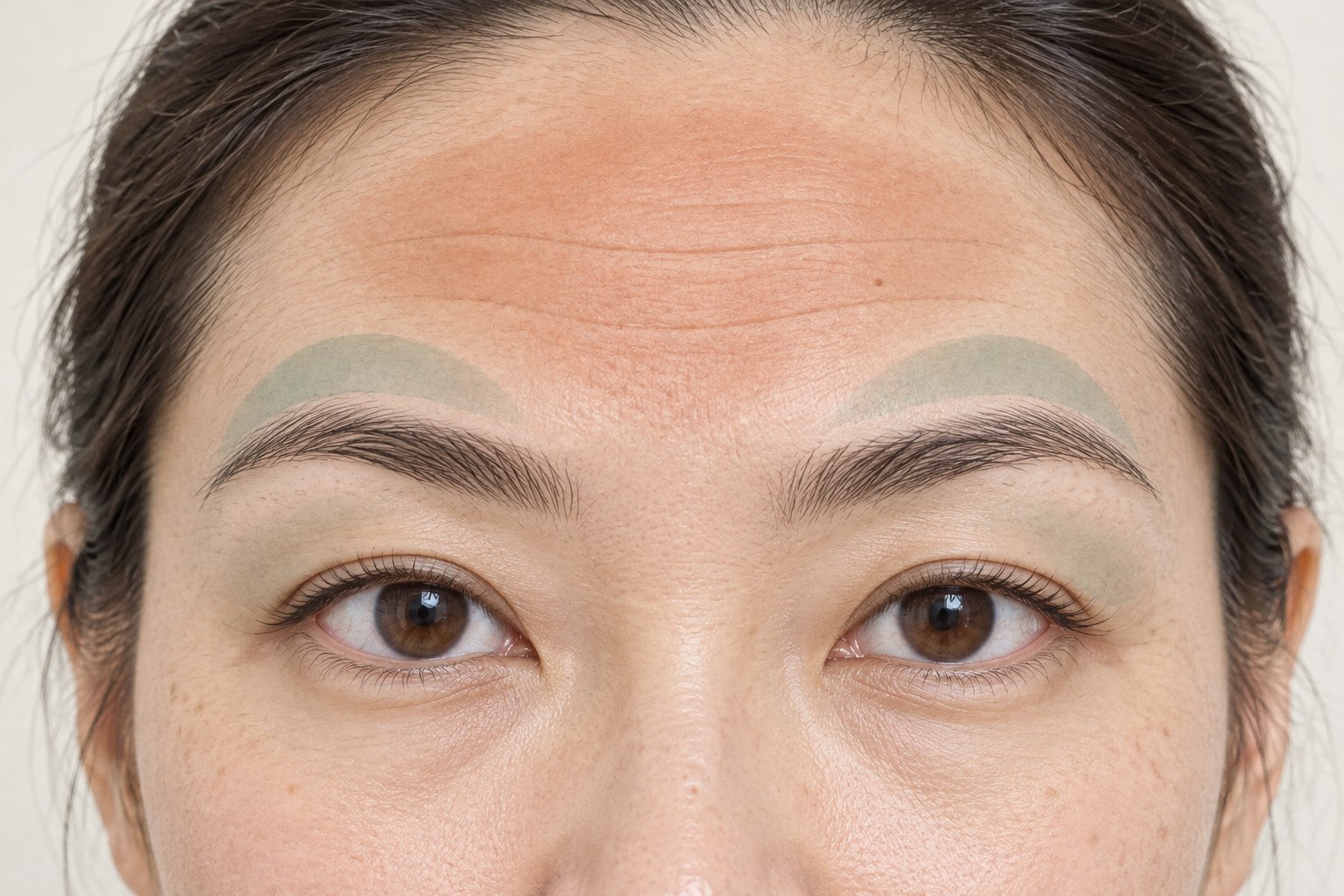
The frontalis raises the eyebrows and creates horizontal forehead lines. Frown-line treatment targets the corrugator supercilii and procerus, which contribute to drawing the inner brows together or downward. These muscle actions should be assessed together, even when not every area needs treatment.
Some people use forehead contraction to help open their eyes. Weakening that support too much can make the eyes feel heavy. The goal is not to remove every bit of movement at the expense of comfortable eye opening.
Why do the eyes feel heavy?
When someone relies on frontalis support, reduced forehead strength may lower brow support and produce heaviness. The original describes adjusting injection height, dose, and sometimes depth to preserve the lower frontalis contribution.
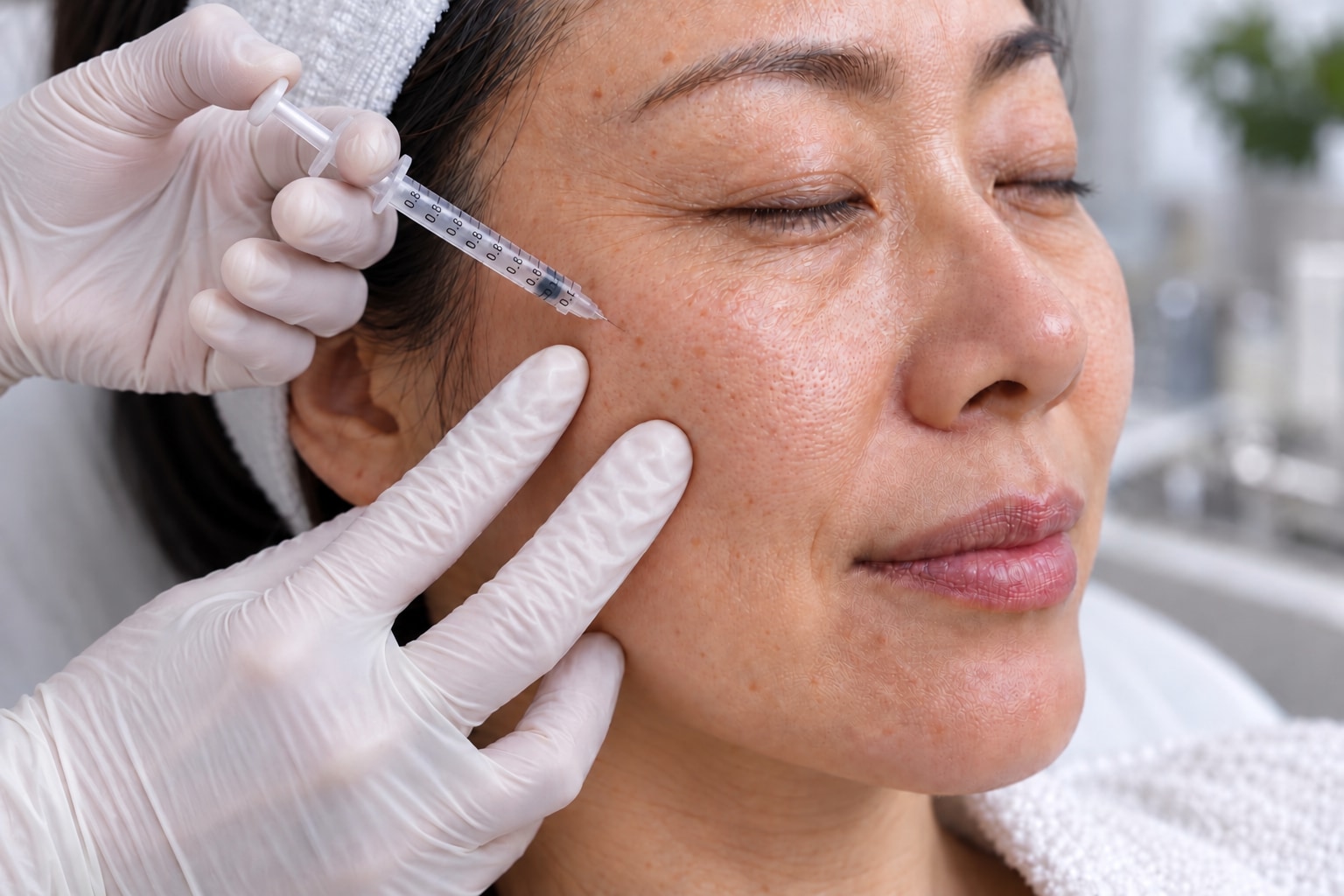
A small randomized study of 29 women found that intradermal injections preserved brow position better than intramuscular injections, but caused more pain. Movement was reduced in both groups. A shallow technique does not guarantee that heaviness will never occur; position and dose also matter.
What is a “Spock” or “samurai” brow?
If the central frontalis weakens while the outer portion remains relatively active, the eyebrow tail can rise into a pointed shape. Conversely, untreated central or upper movement can become more obvious when surrounding areas weaken. This is a difference in remaining movement, not necessarily sudden muscle growth.
After the treatment effect settles, a clinician can assess the still-active area and consider a small targeted adjustment. The original notes that movement is commonly reassessed around two weeks, with individual variation. More toxin across the entire forehead is not automatically the right answer, especially when brow support is already reduced.
Brow droop and eyelid ptosis are different
In eyelid ptosis, the upper eyelid margin itself sits lower than normal. This differs from the brow moving downward. Toxin reaching the levator palpebrae superioris—the muscle that lifts the upper lid—can cause eyelid ptosis. The lid may look sleepy or obstruct the upper field of vision.
Careful injection position, depth, dose, and direction help reduce unintended spread. The original makes clear that finger support at the orbital rim and needle-bevel orientation are not proven barriers that eliminate the risk.
What can help if an eyelid droops?
The treating clinician should distinguish eyelid ptosis from brow droop or an eye-surface problem; an ophthalmology assessment may also be needed. Some cases improve within weeks, while others last three months or longer. The duration of the intended toxin effect and the time a complication takes to recover are not identical.
Prescription drops such as apraclonidine may temporarily lift the lid in some cases. They are not an antidote that restores nerve or muscle function, and suitability, contraindications, and adverse effects need a prescribing clinician’s assessment.
Evidence that radiofrequency treatment speeds recovery is limited, particularly around the eyes where device and treatment-site risks differ. Steroid injections are not an established general solution. A case involving steroid–antibiotic eye drops should not be interpreted as proof that injecting steroid into muscle reverses ptosis.
When should you contact the clinic?
Contact the clinician if eye opening, brow position, or expression becomes uncomfortable. Eye pain, reduced vision, double vision, or trouble closing the eye needs prompt assessment rather than waiting until a scheduled follow-up.
Before another treatment, explain if you previously had heavy eyes or an unnatural expression. A few remaining lines may reflect a deliberate effort to preserve function, and deep skin creases may not disappear with toxin alone. A plan should consider your previous response, everyday comfort, and desired expression together.
Your next step
Prepare your botulinum toxin consultation
Bring questions about the brand, units, intended areas and expression goals. Ask the clinician to explain the proposed plan before comparing quotes.
Continue to Keauty onboarding to organize your preferences. A clinician makes the final treatment decision.
Selected references from the original
Edited and translated from Dr. Youro Kang’s Naver blog with permission. This is an adapted article, not a full reproduction. The original publication date is shown above.
이마, 미간 보톡스 부작용: 눈 무거움, 안검하수, 사무라이 눈썹
Read the Korean original on NaverAbout the author

Dr. Youro Kang · 강유로
Physician · Treatment article author
Dr. Youro Kang (강유로) is a graduate of Inha University College of Medicine and a former clinic director at PPEUM Clinic, Hongdae branch. The treatment articles are adapted for the Keauty journal from the original Korean-language writing.
View full profileThe Keauty Medical Board manages this blog. Authorship and any article-specific medical review are credited separately.